
Kleo Fitness
A mobile app concept designed for female athletes training outside of traditional team structures — built around performance, structure, and sport-specific goals.
Project
Overview
Kleo is a mobile app concept designed for female athletes navigating training outside of traditional team structures. Built as a product design case study, the project focuses on how a digital experience can support athletes who still want to train with intention, structure, and sport-specific goals after college or beyond organized programs.
While many fitness apps cater to general wellness audiences, Kleo explores a more targeted product opportunity: designing for women who approach training from a performance mindset. The project centers on creating a mobile experience that feels purposeful, motivating, and aligned with the needs of independent athletes.
- Independent athletes needed training support that felt specific to their sport and goals.
- Available fitness products were too broad and did not reflect a performance mindset.
- Users needed a more structured and motivating experience to maintain consistency outside of team environments.
Research &
Discovery
To inform the product direction, I identified the core needs of female athletes training outside of structured team environments — understanding what independent athletes would need from a digital training product beyond what traditional fitness apps offer.
- Receive sport-specific workout recommendations
- Track performance and progress over time
- Maintain motivation and training consistency
- Connect workouts with smart devices
- Competitive analysis of five fitness and athlete-focused apps
- Review of training habits, behaviors, and pain points
- Development of initial user personas
Athletes wanted an experience that felt distinct from general fitness products.
Sport choice and specialization strongly influenced workout relevance.
Progress tracking needed to be both easy to use and motivating.
A simple and predictable navigation system was essential to the overall experience.
User
Personas
Three personas were developed to represent female athletes training independently across different sports. Click each to explore their story.
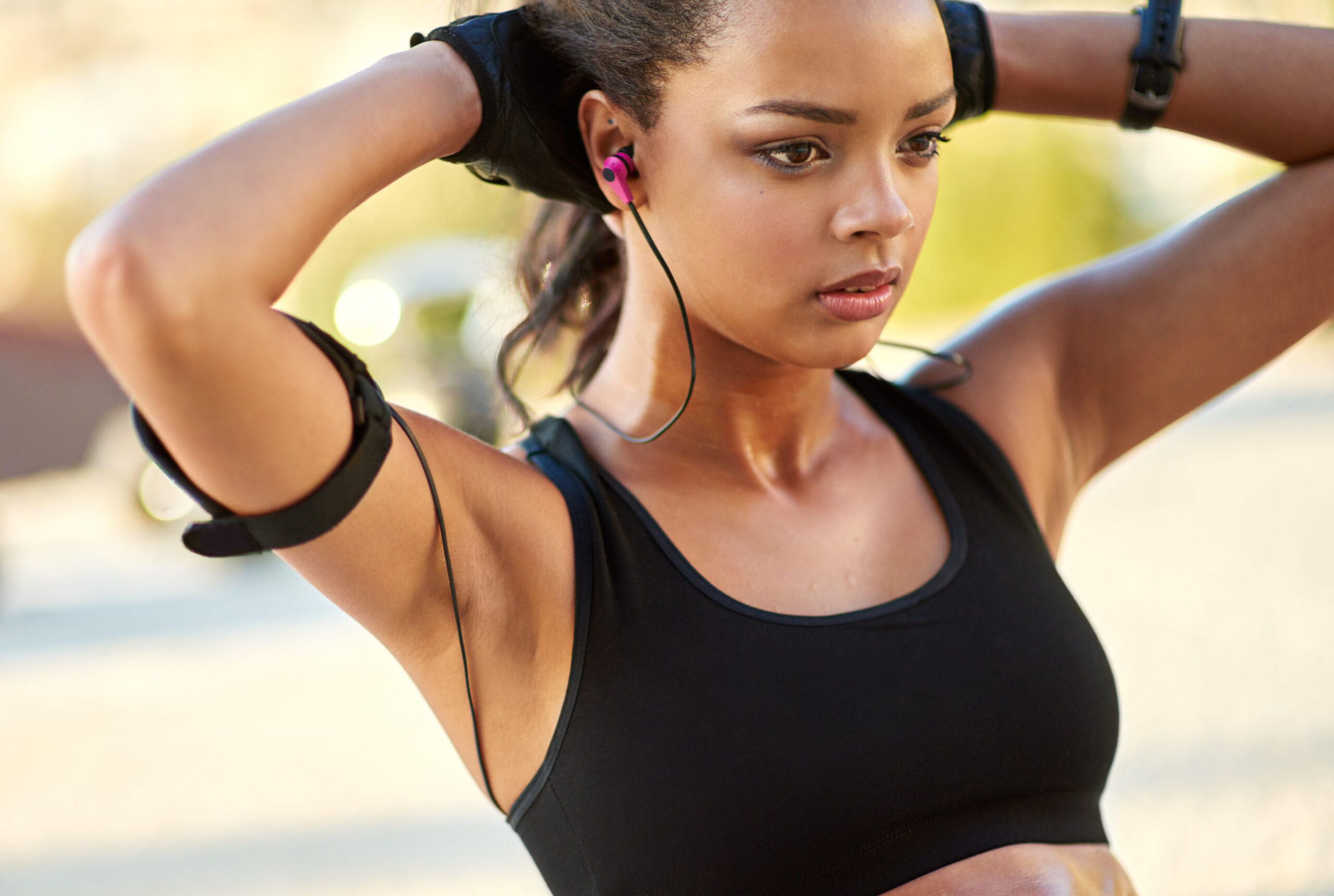
Jordan Ellis
A former Division I sprinter who continues to compete in regional track events. Since graduating, she no longer has access to structured practices or coaching and now trains independently while working full-time. She relies on past training knowledge and self-guided routines, but misses the structure and accountability of a team environment.
- Improve sprint time and explosive power
- Maintain competitive performance post-college
- Follow structured, sport-specific workouts
- Track lap times and performance metrics
- Uses Apple Watch to time sprints
- Tracks workouts manually in Notes
- Watches sprint technique videos
- Uses social platforms for athlete inspiration
- Personalized sprint training plans
- Integrated timing tools within workouts
- Performance tracking and history
- Motivation through challenges
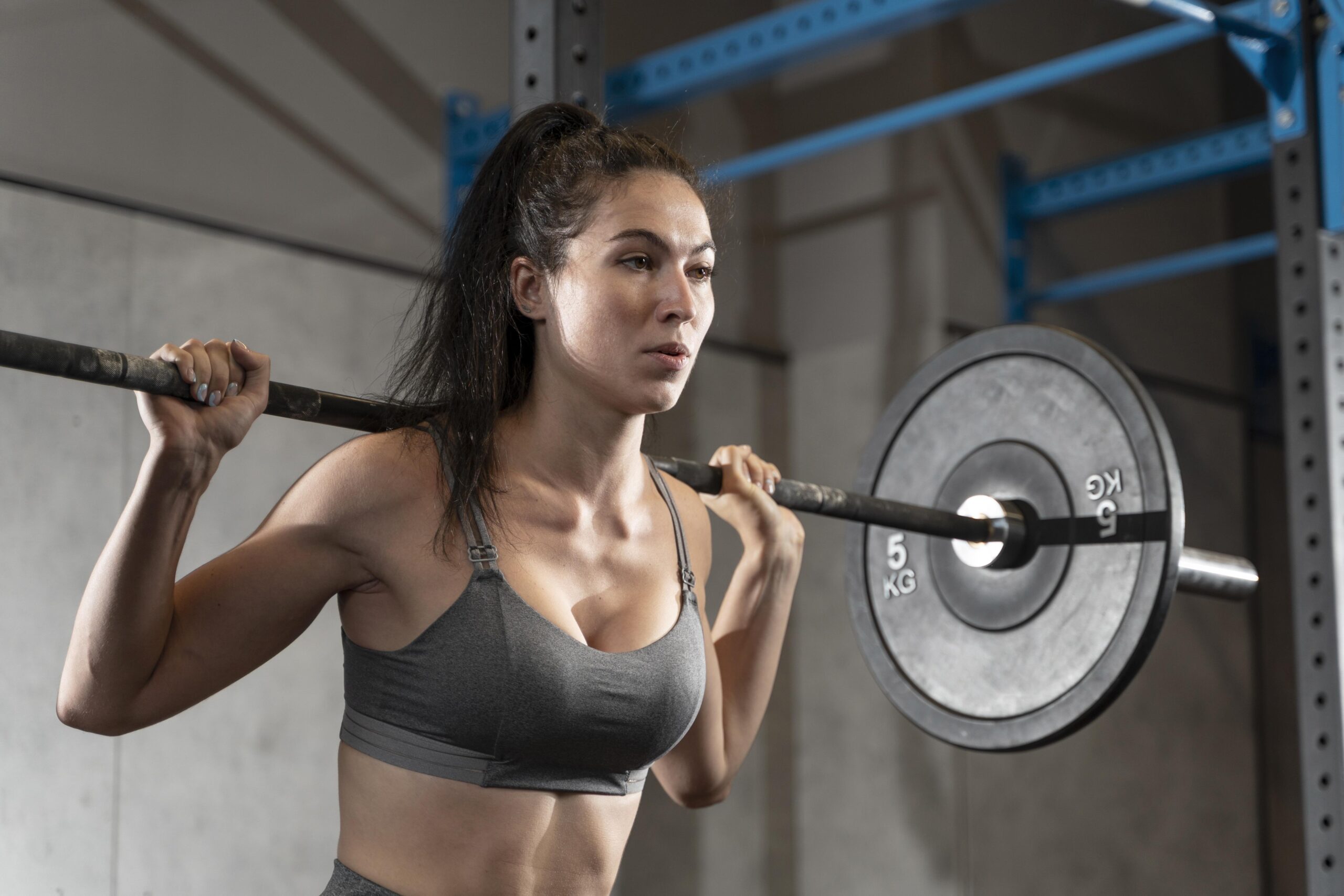
Maya Thompson
A former collegiate weightlifter who now trains independently while working full-time. Without daily coaching, she manages her own programming but often questions whether her training structure is optimized for performance.
- Improve snatch and clean & jerk performance
- Track strength progression
- Prevent injury through structured programming
- Maintain a competitive edge
- Uses a smartwatch to track workouts
- Watches lifting technique videos
- Tracks performance manually
- Structured strength training cycles
- Personal record (PR) tracking
- Performance-based progress metrics
- Integrated support for nutrition planning
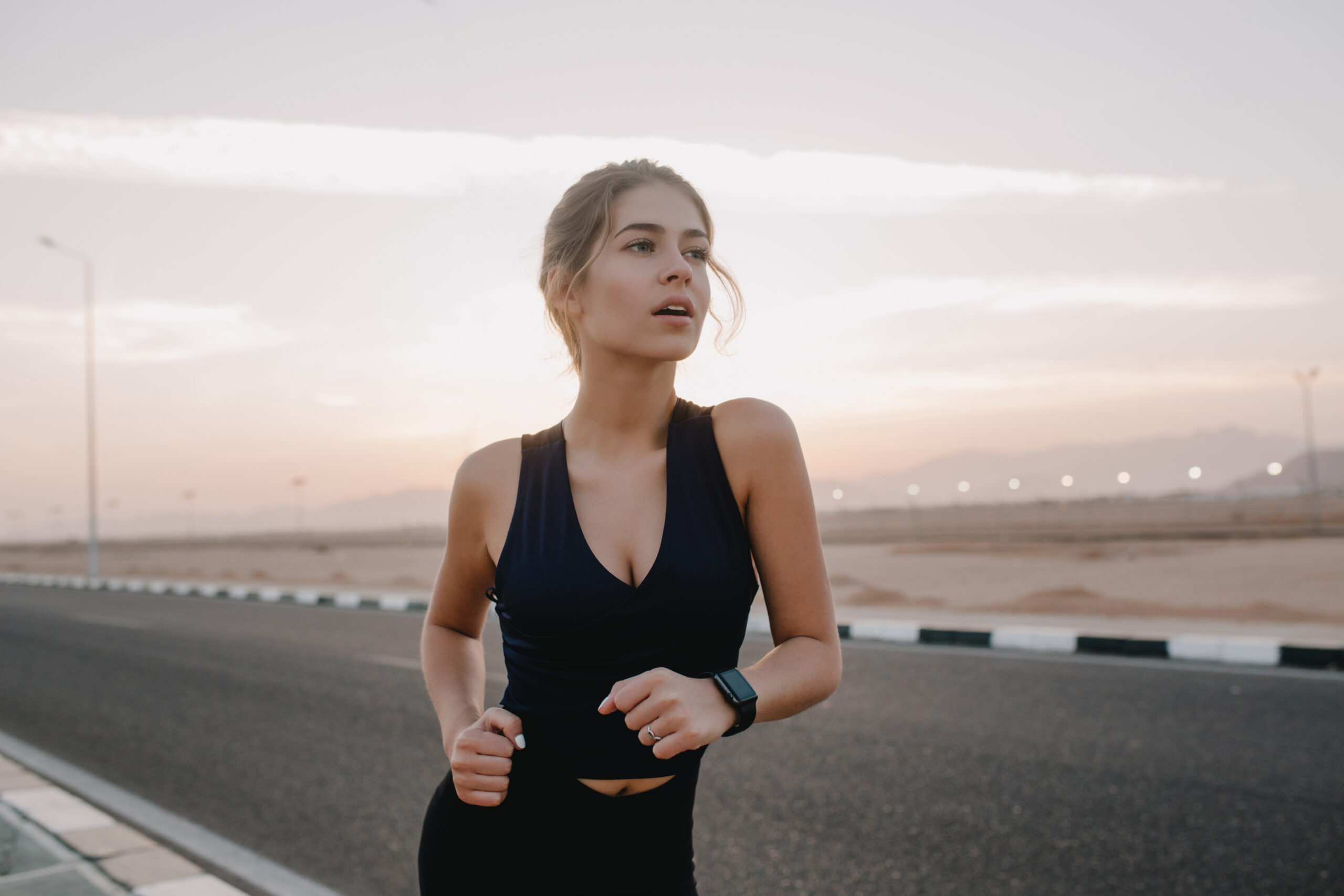
Sofia Martinez
A former Division II runner who now trains for long-distance races while balancing a demanding career. She trains independently and misses the accountability and structure of team-based training.
- Improve race times
- Follow structured endurance plans
- Track pace, distance, and recovery
- Avoid burnout
- Uses Apple Watch daily
- Tracks runs through Strava
- Reads training content and blogs
- Adaptive endurance training plans
- Smartwatch integration for real-time tracking
- Motivation through challenges
- Centralized training, nutrition, and scheduling
Design Process
& Decisions
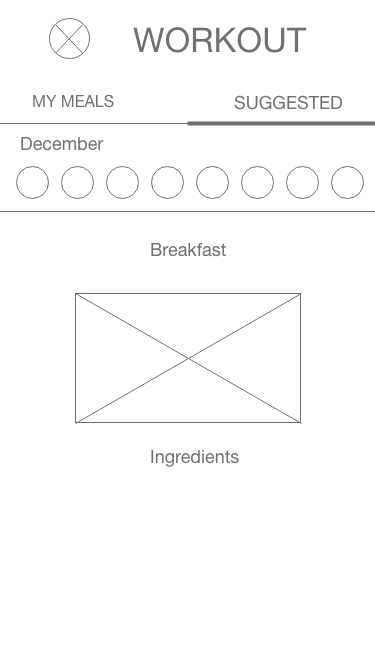
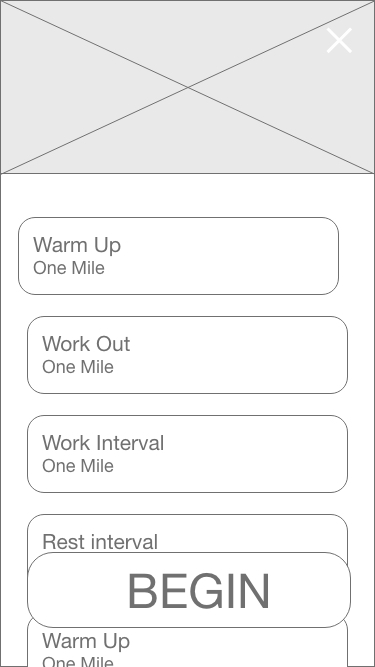
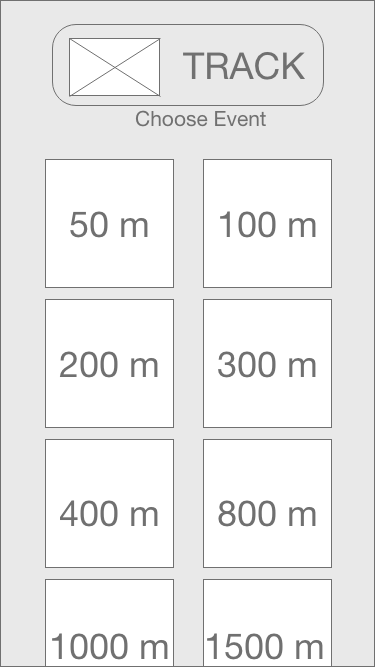
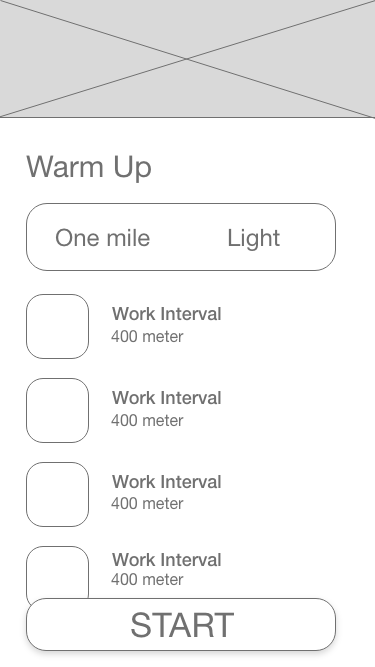
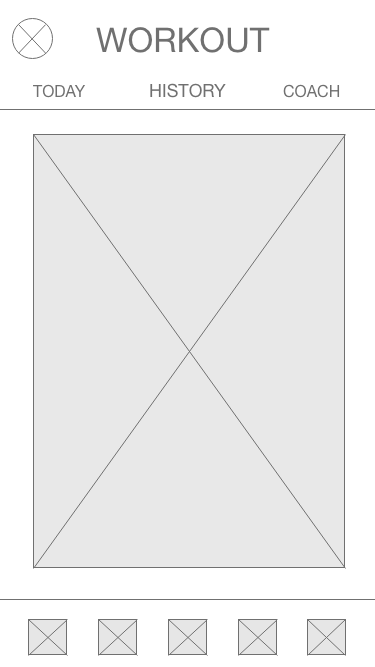
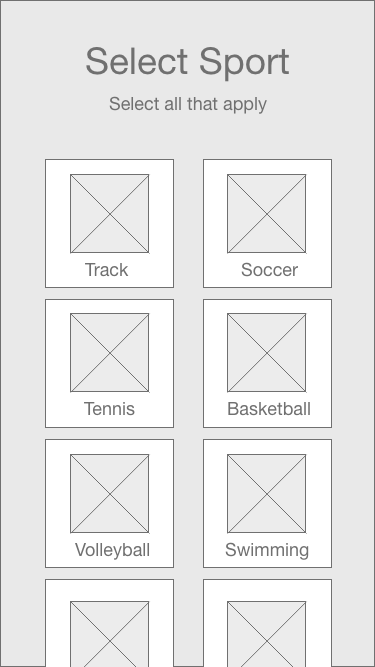
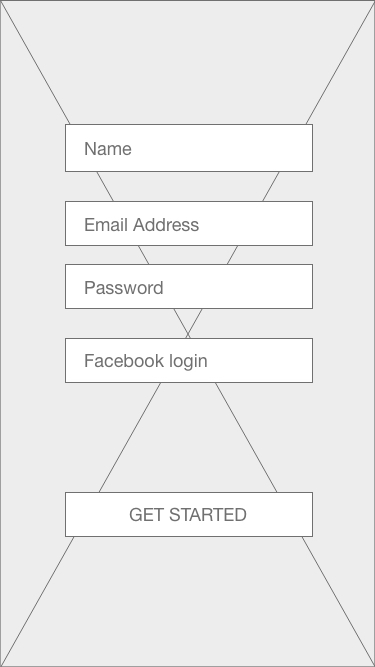
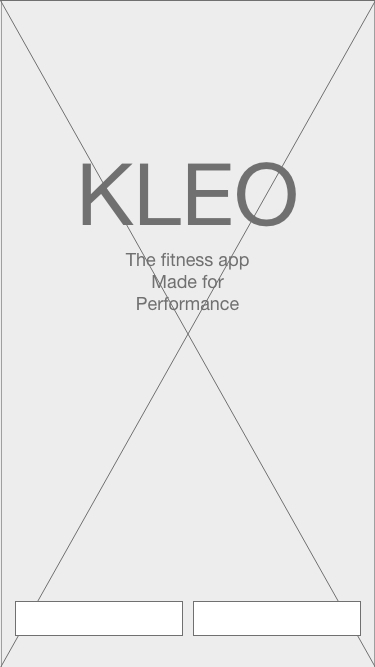
Wireframes were used to establish layout structure, user flow, and core interactions before moving into final UI design. Early feedback sessions revealed key usability issues that drove the first round of improvements.
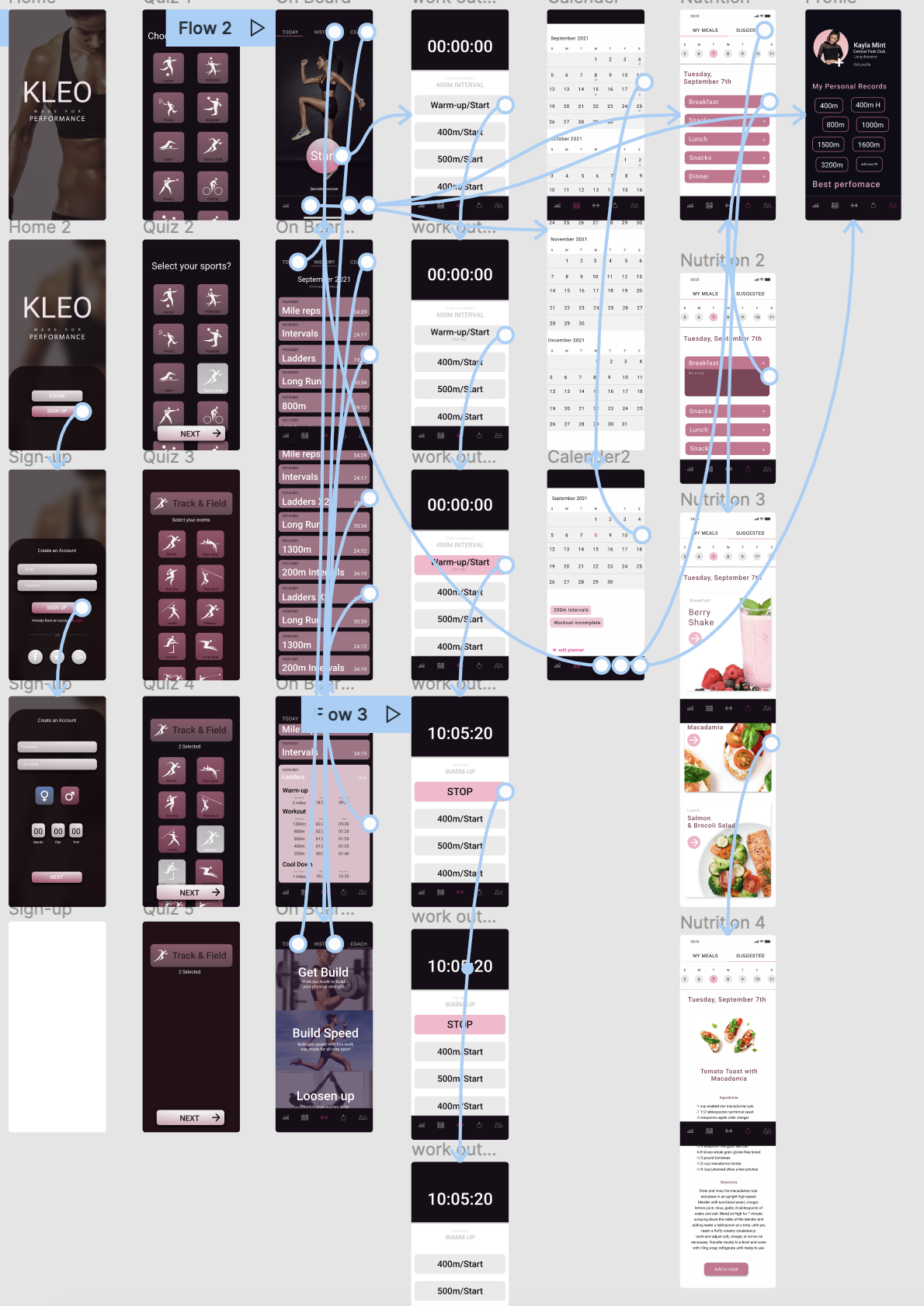
Click to view full wireframe
Mis-tap Issues
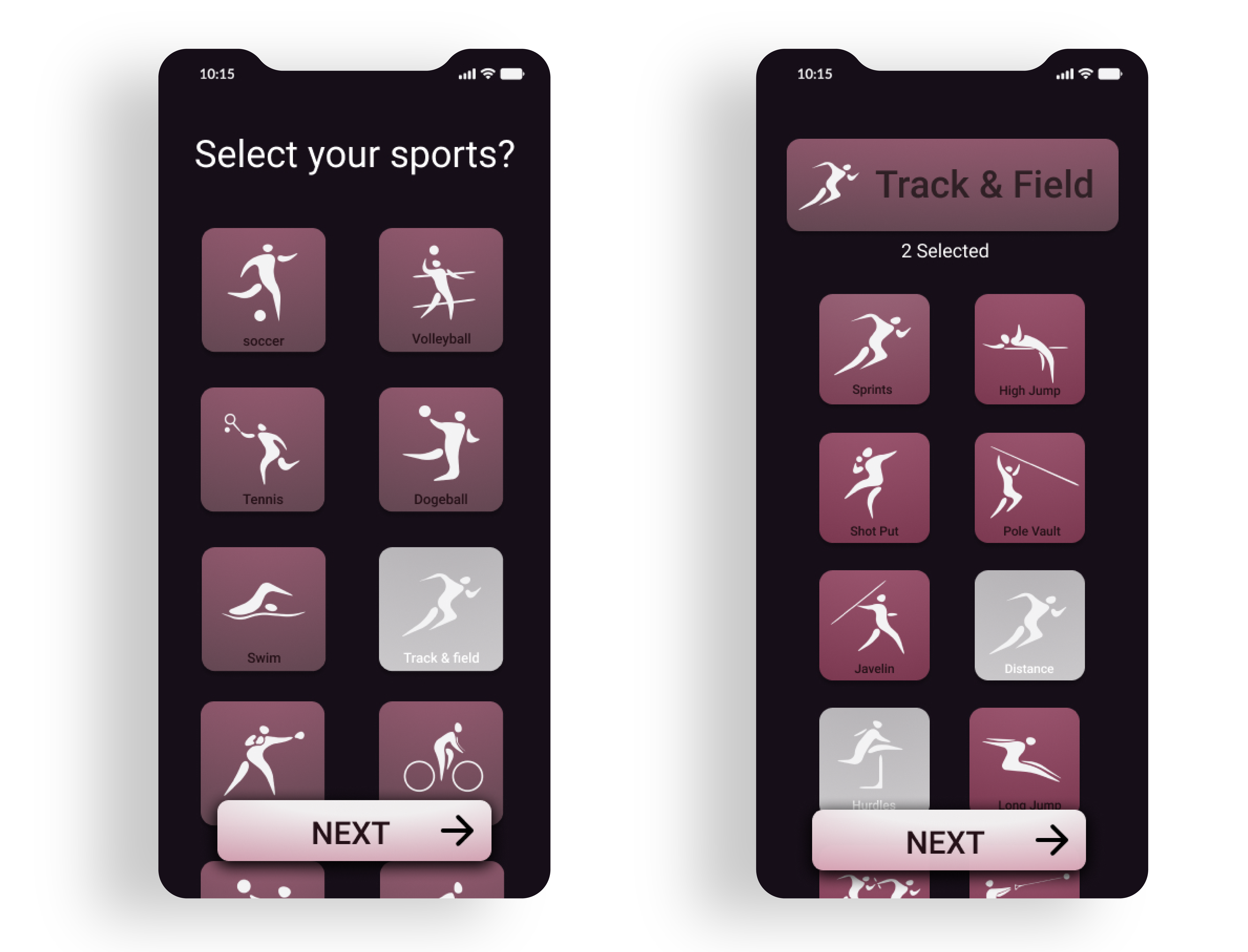
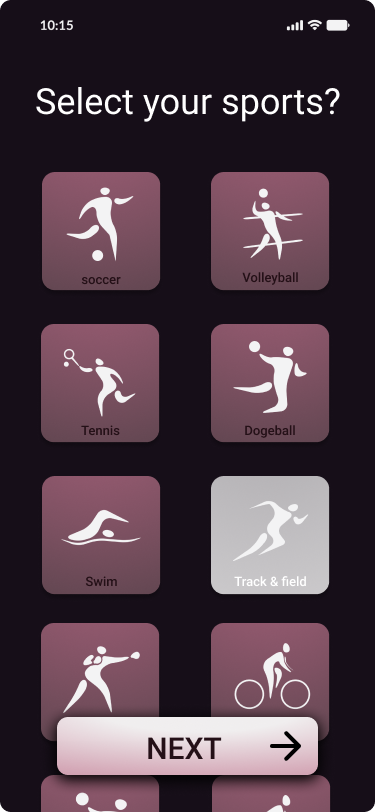
Images in selection screens were too close together, causing frequent accidental taps. Restructured into clearly boxed, spaced elements.
Visual Inconsistency
Misaligned elements in the sports selection screen created a visually inconsistent experience. All elements were re-aligned to a clean grid.
Unclear Affordances
Users weren’t sure where to tap. Interactive elements were redesigned with clear visual cues and tap targets to improve usability.
Bottom nav — thumb-friendly structure
Key navigation was positioned at the bottom where mobile users expect it, with clear icon labels: Statistics · Calendar · Workout · Meal · Connect · Profile. This made the structure predictable and thumb-friendly.
Sport selection & onboarding
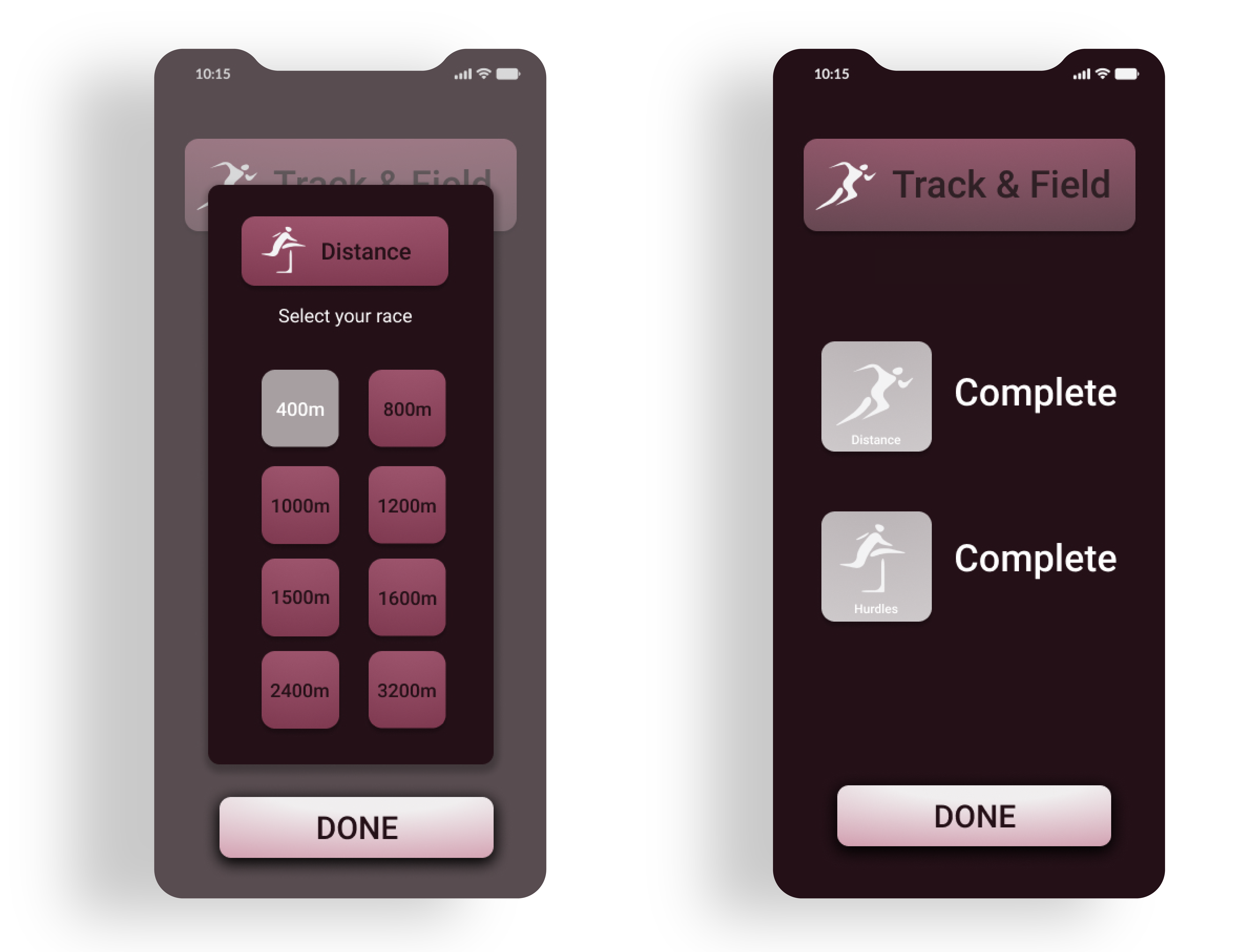
Users first choose their sport and specify positions or events. Choices were restructured from free-form images into clearly boxed, tappable elements with consistent spacing — improving accessibility and reducing errors.
Daily training & session flow
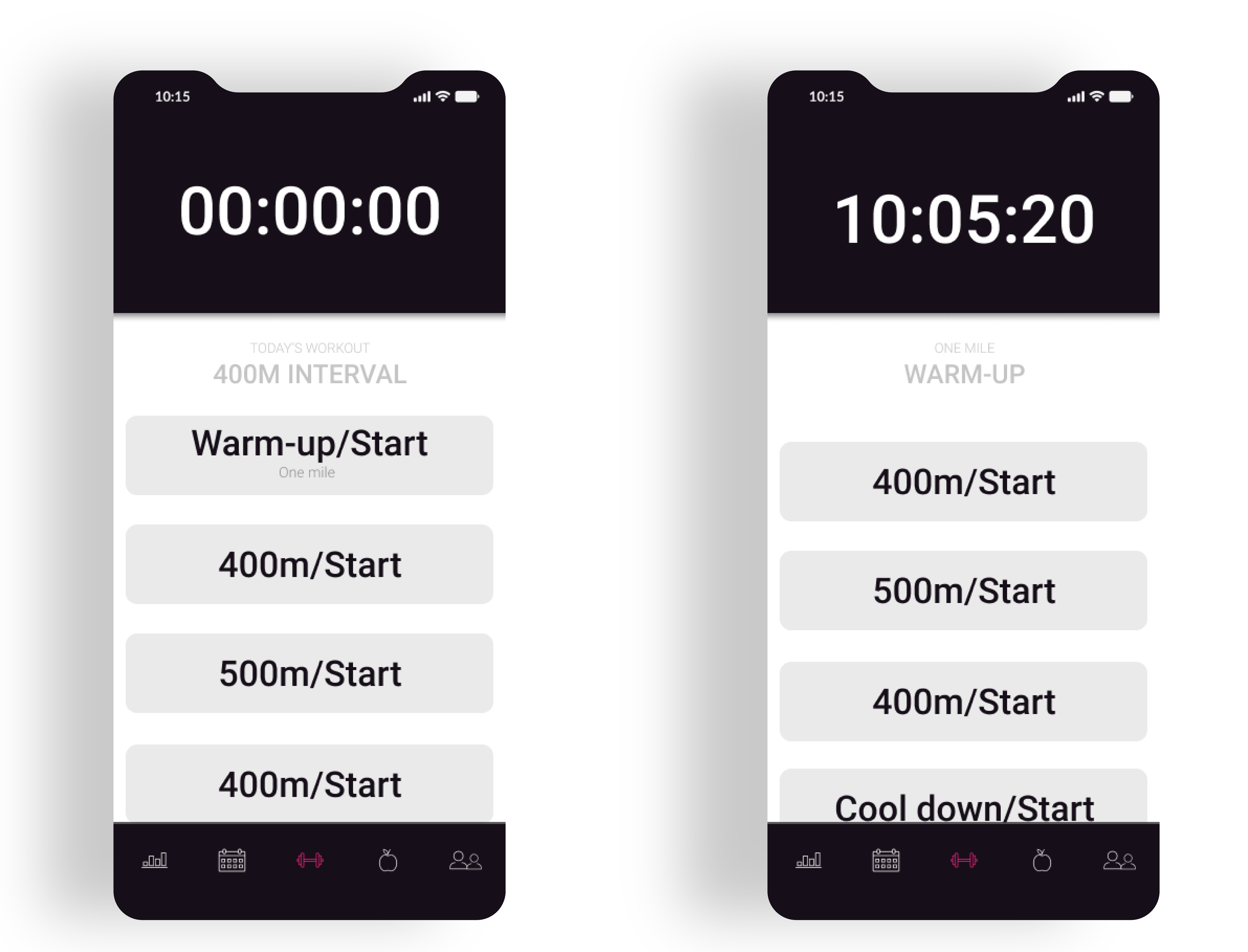
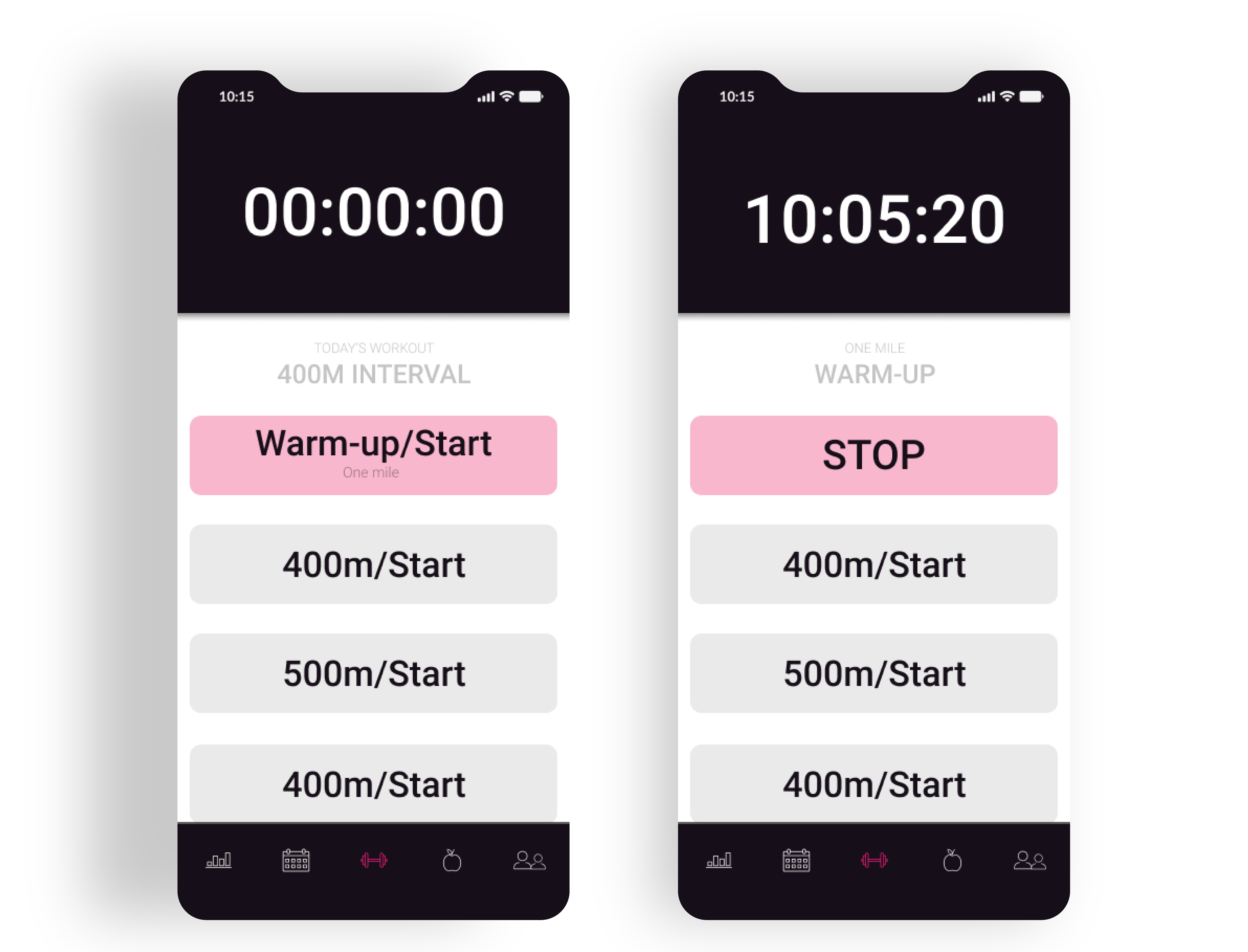
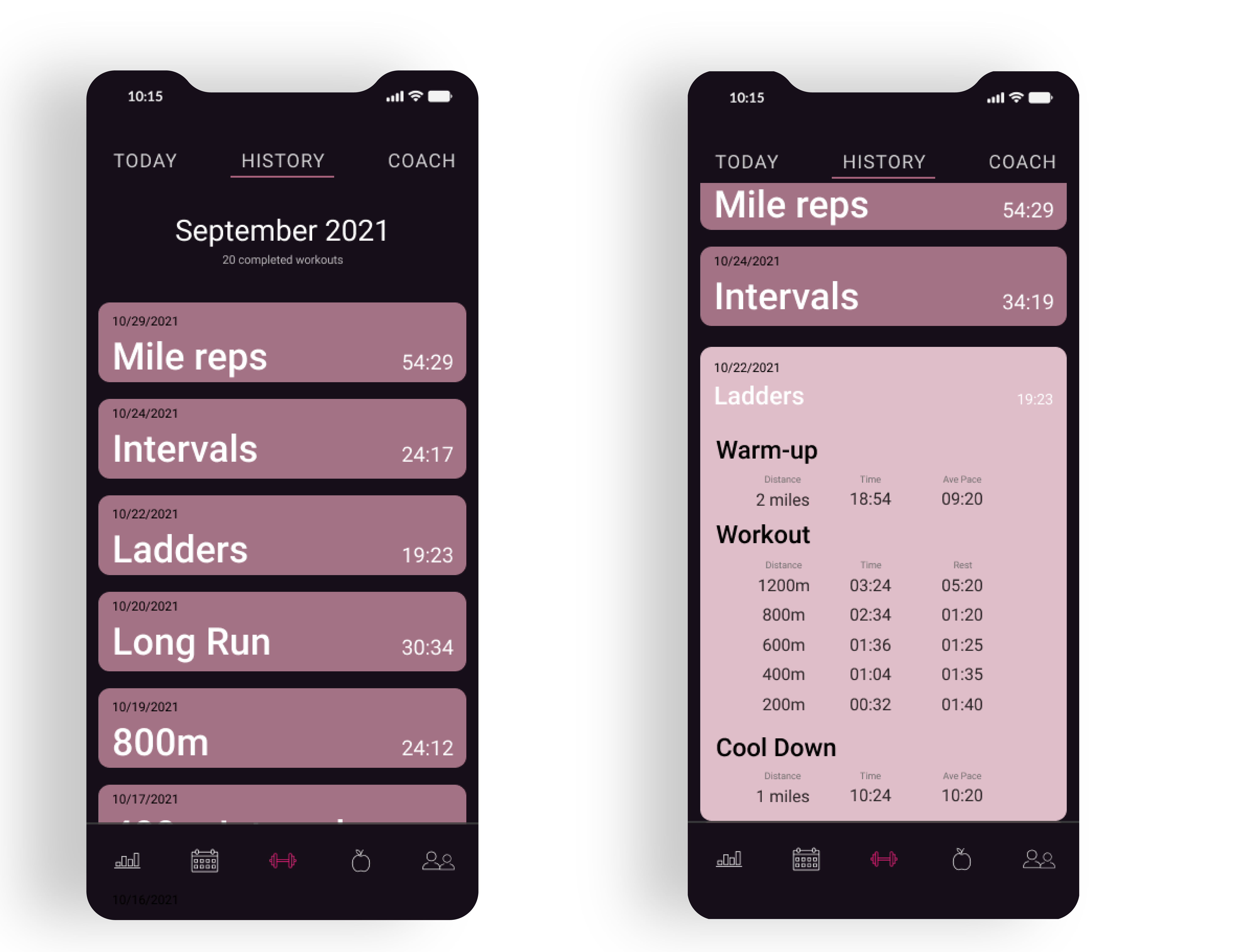
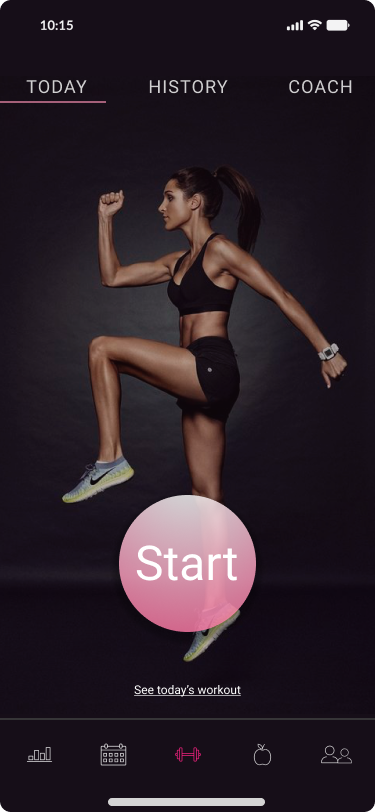
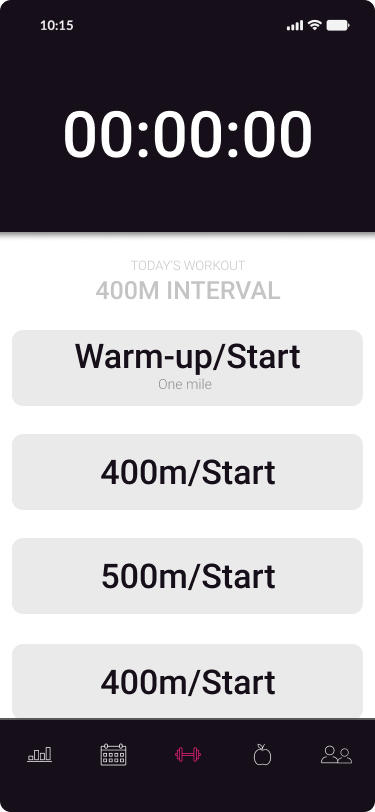
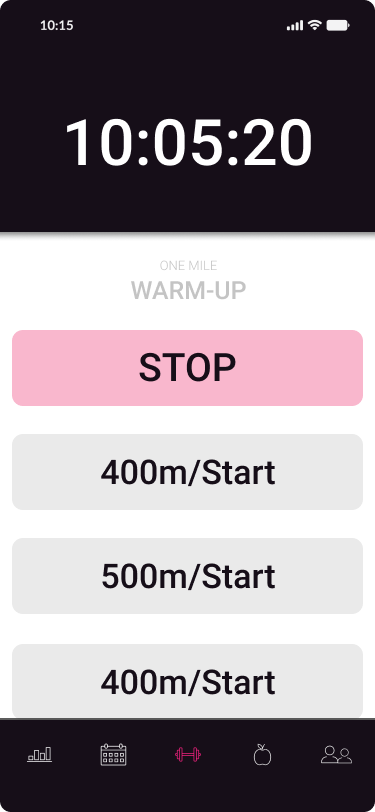
The workout screen displays daily training with a clear Start button. Active workouts stay highlighted, completed exercises fade out, and progress feels clear and sequential — mirroring real training routines.
The Final
Experience
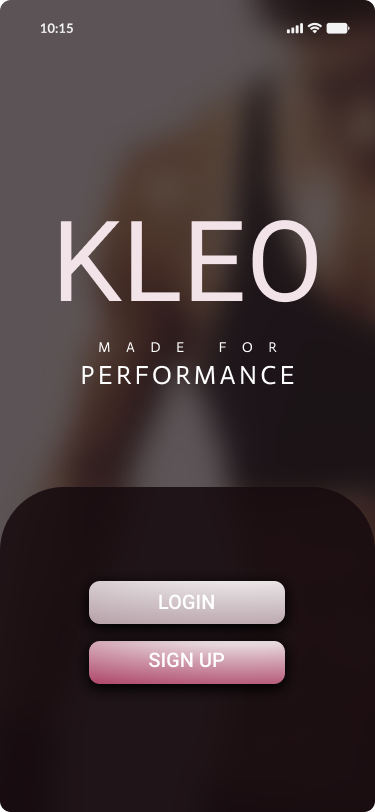
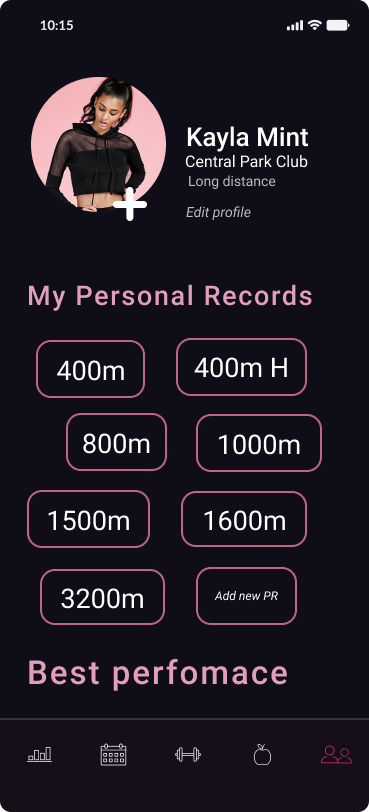
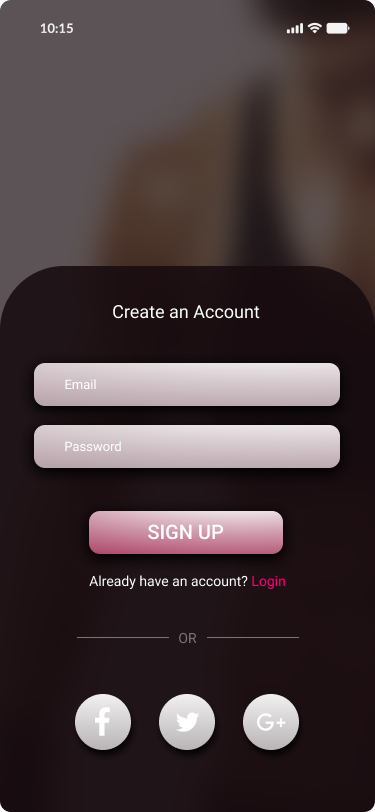
The final design of Kleo creates a structured, performance-driven mobile experience tailored to female athletes training independently. Through a clean interface and sport-specific workflows, the app supports users with guided workouts, progress tracking, and built-in motivation.
Smartwatch
Integration
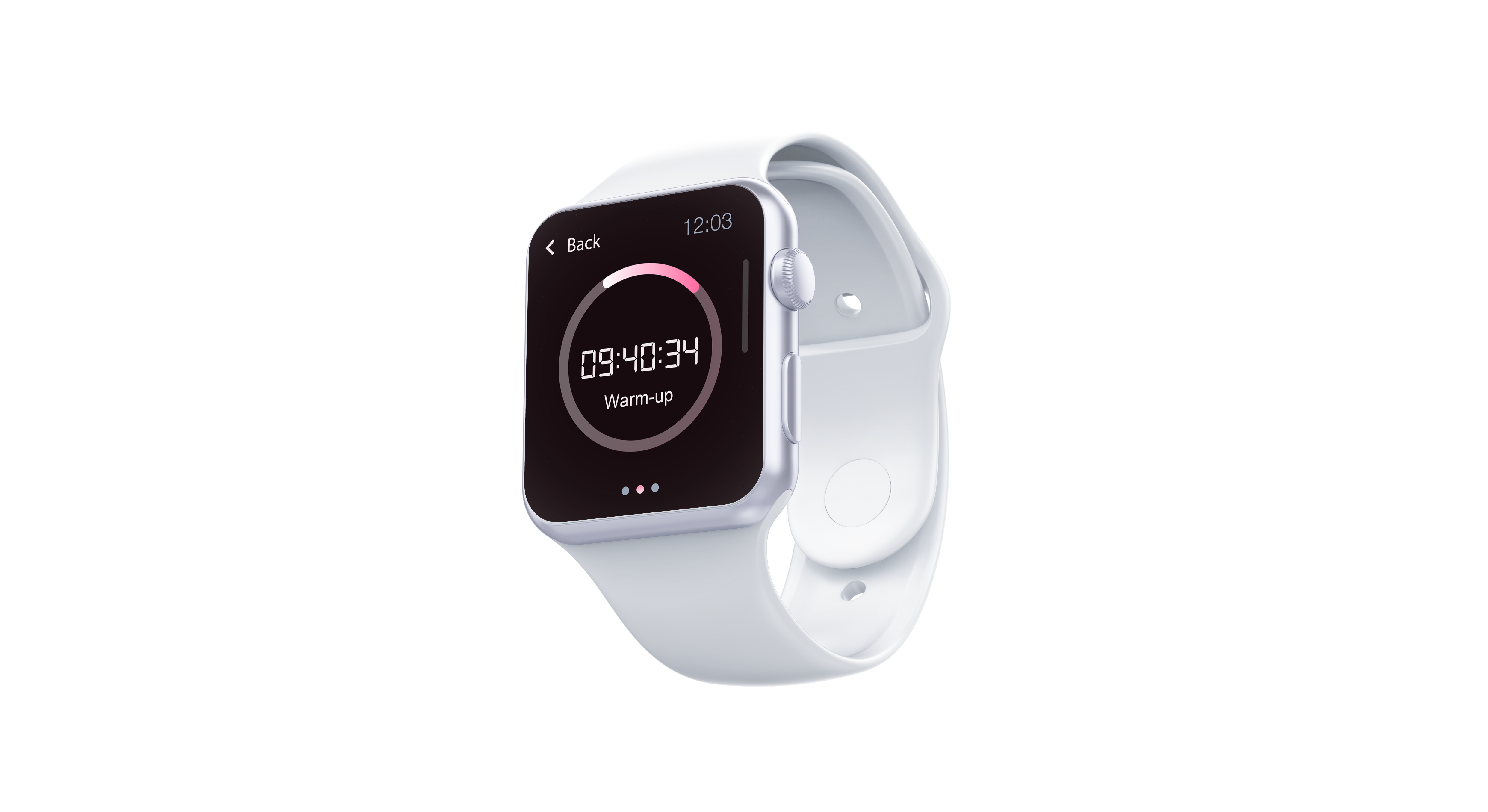
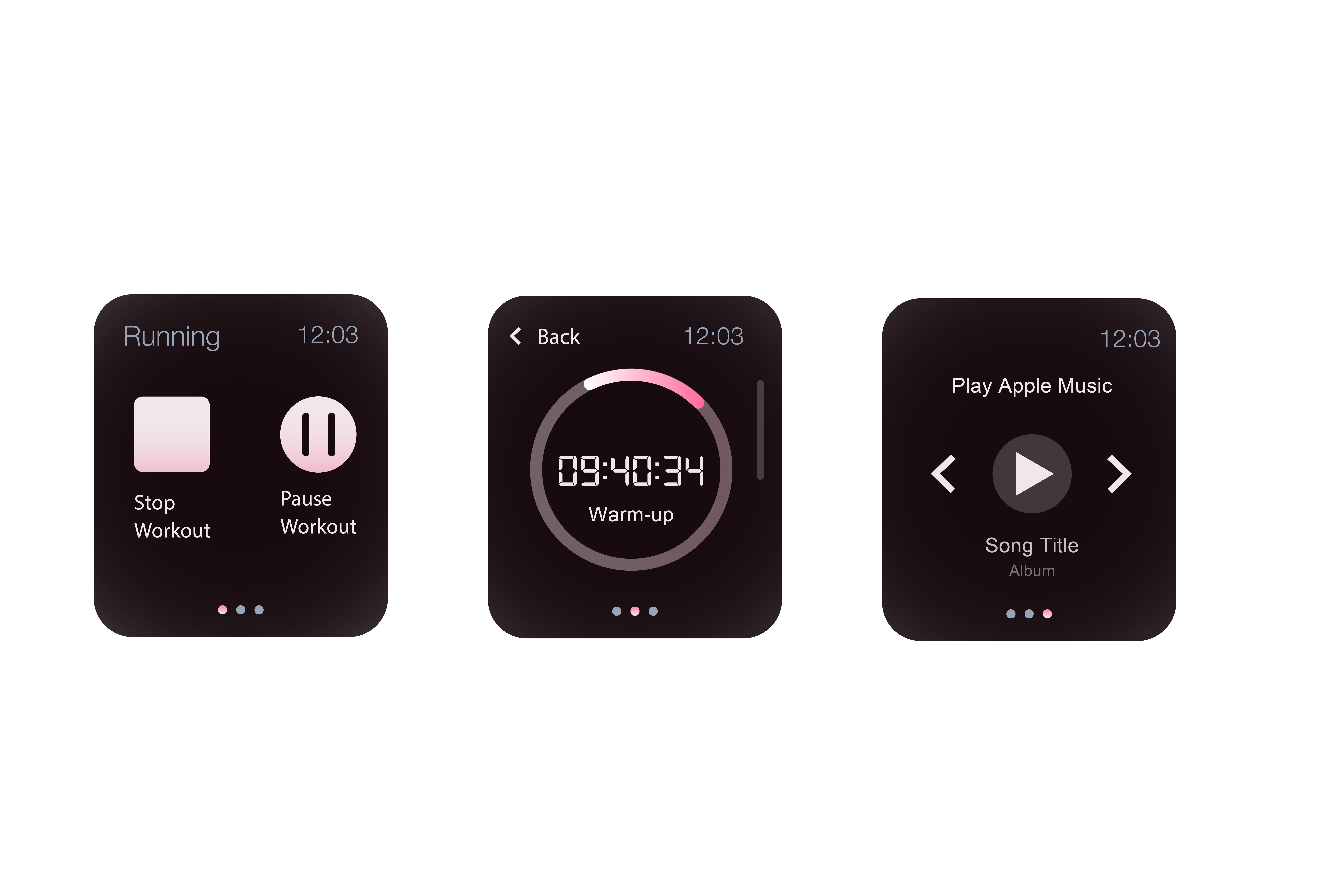
Recognizing that athletes train on the go, a smartwatch interface was designed to sync to Kleo — allowing workout progression tracking, stopwatch and guided routine display, and quick access without reaching for a phone.
This improves real-world workout adoption and keeps athletes in flow during training sessions.
Meal &
Nutrition Page
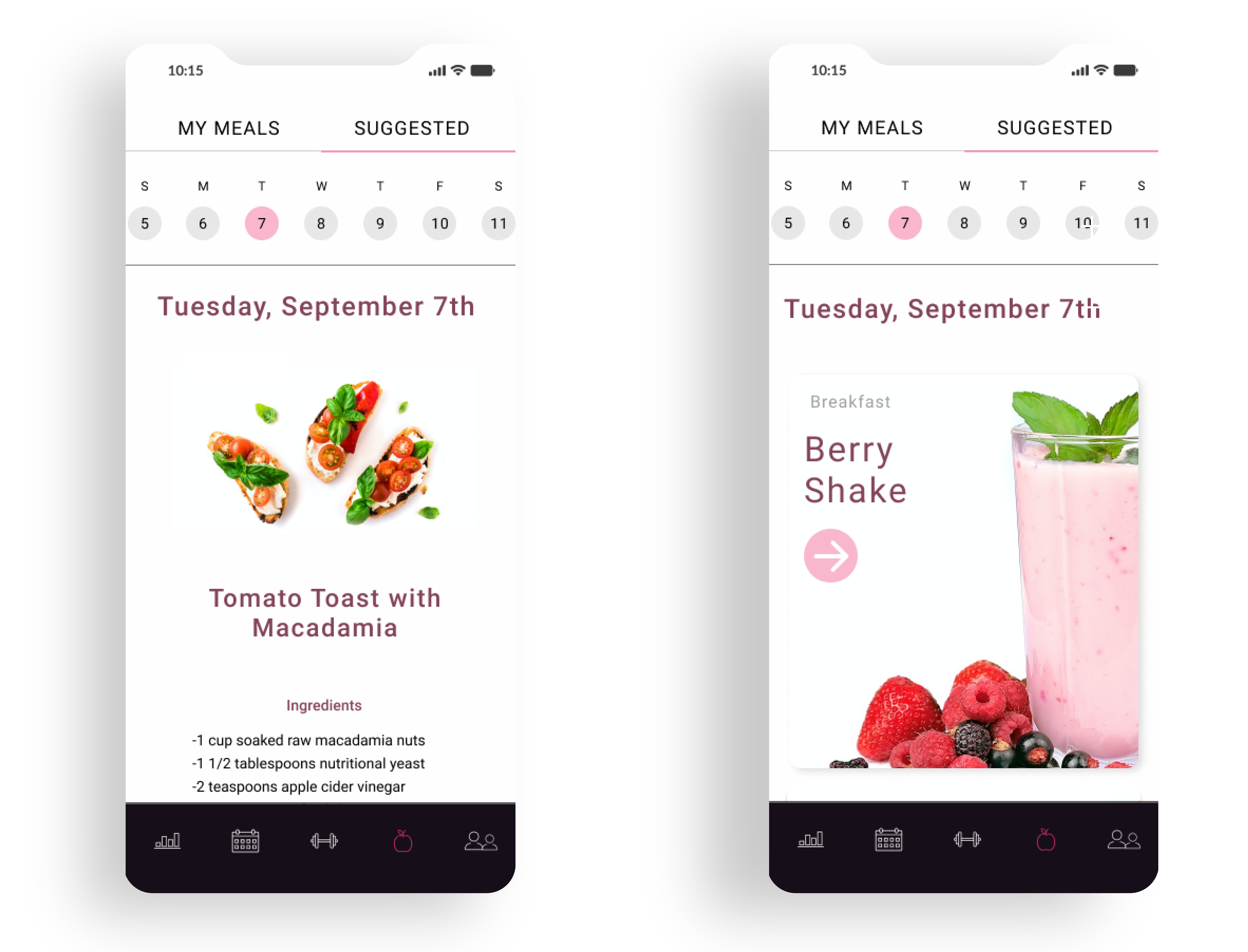
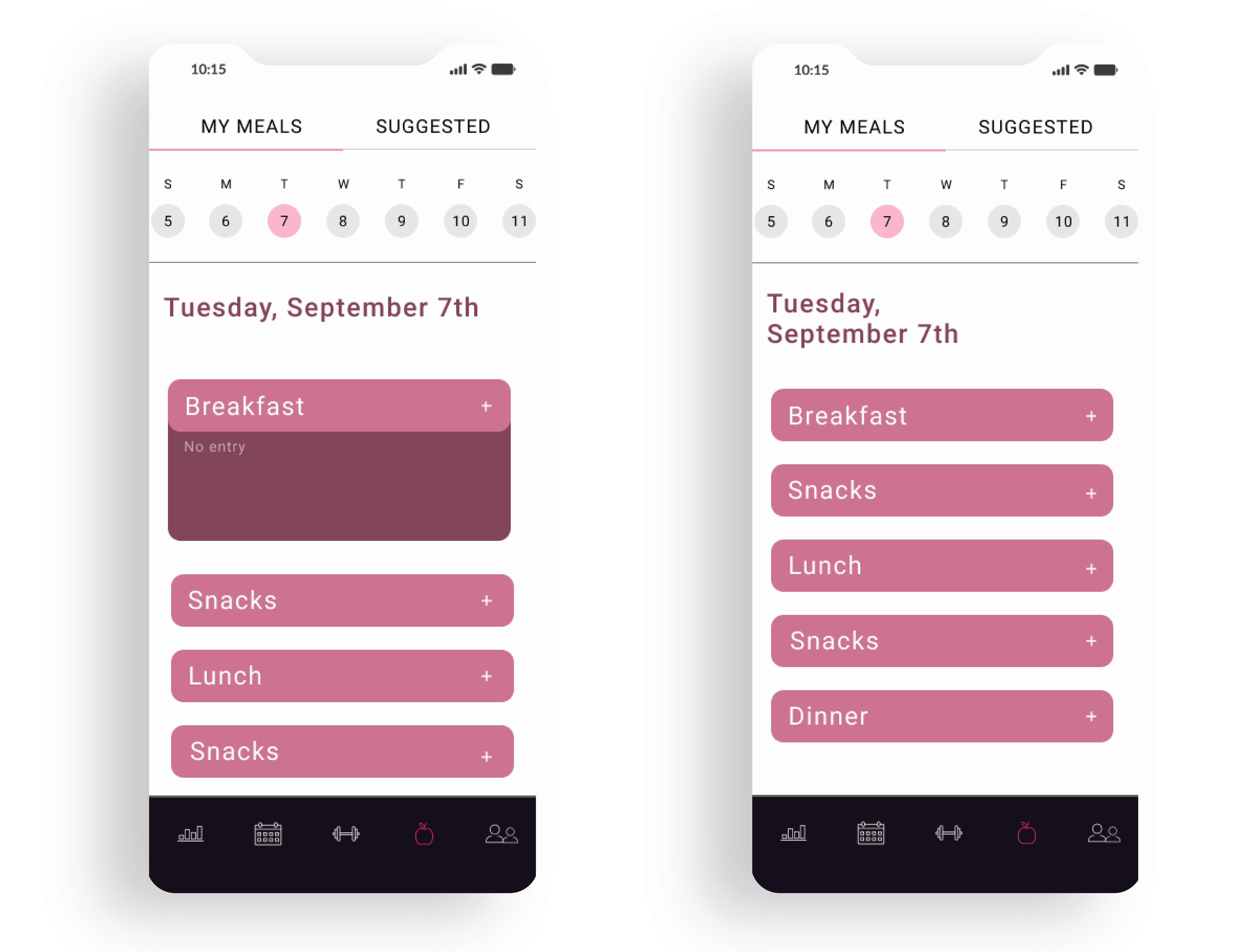
Nutrition suggestions were added to support performance — not just calorie counting. This addresses athlete-specific dietary needs including protein timing, fueling, and recovery.
Rather than generic fitness diet advice, Kleo delivers suggestions that reflect how athletes actually fuel for performance.
Conclusion
This project demonstrates how a focused product experience can support independent athletes with the structure and guidance often lost outside of team environments. By designing around performance, consistency, and clarity, Kleo creates a more intentional approach to training through mobile.
The biggest design challenges — unclear navigation, mis-tappable elements, and a lack of sport-specific structure — were solved by listening closely to how athletes think about their training rather than defaulting to generic fitness UX patterns.
If continued, next steps would include high-fidelity prototyping with real user data, a live smartwatch integration prototype, and additional usability testing with target athletes across different sports.